Austrian skull: 60 years after tourist stole it from a cathedral, he sent it back
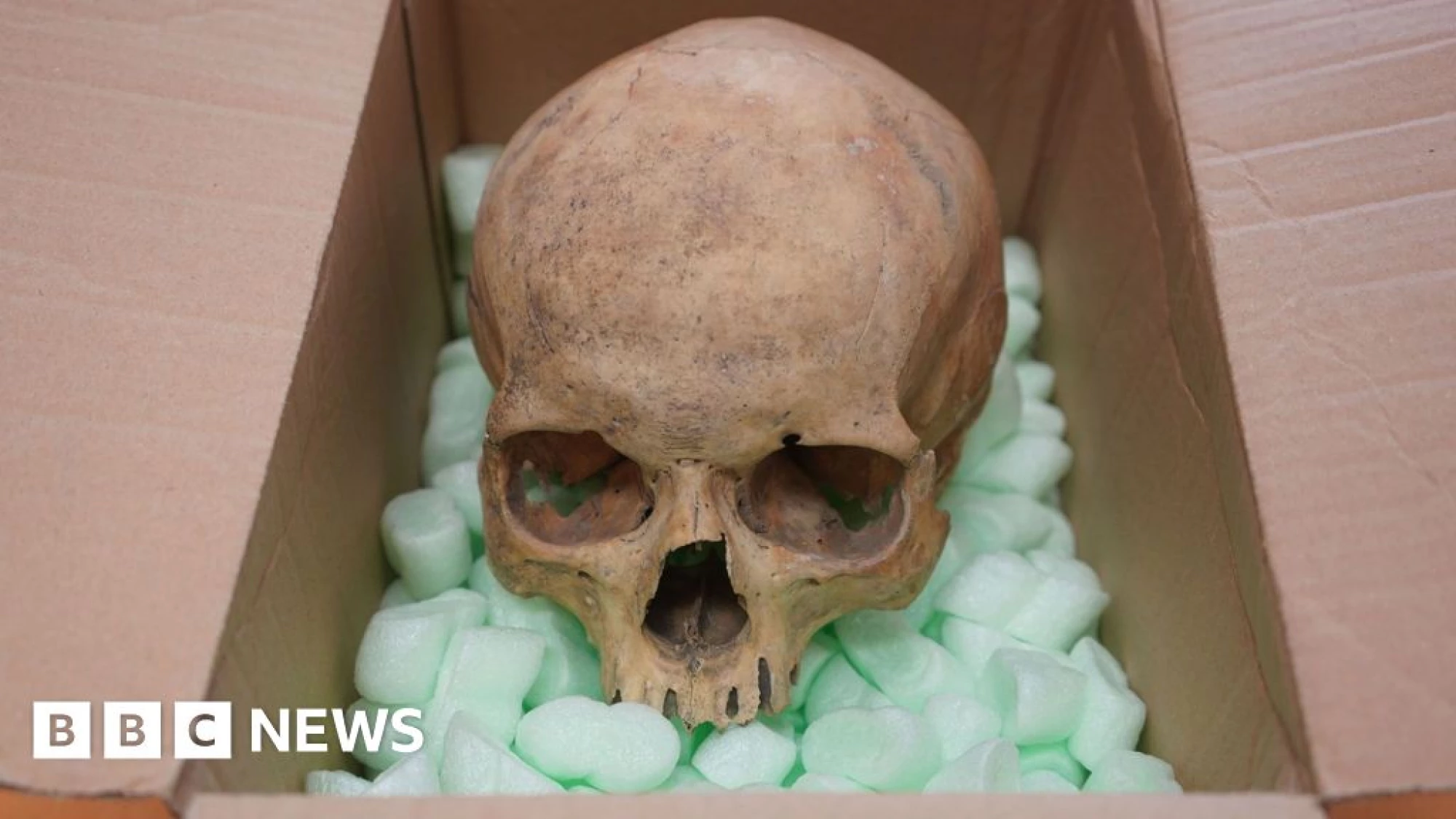
"It's not something you expect," says Franz Zehetner, who opened the parcel addressed to Vienna's St Stephen's Cathedral.
Watch LiveBritish Broadcasting CorporationHomeNewsSportBusinessInnovationCultureArtsTravelEarthAudioVideoLiveDocumentariesHomeNewsIsrael-Gaza WarWar in UkraineUS & CanadaUKUK PoliticsEnglandN. IrelandN. Ireland PoliticsScotlandScotland PoliticsWalesWales PoliticsAfricaAsiaChinaIndiaAustraliaEuropeLatin AmericaMiddle EastIn PicturesBBC InDepthBBC VerifySportBusinessExecutive LoungeTechnology of BusinessFuture of BusinessInnovationTechnologyScience & HealthArtificial IntelligenceAI v the MindCultureFilm & TVMusicArt & DesignStyleBooksEntertainment NewsArtsArts in MotionTravelDestinationsAfricaAntarcticaAsiaAustralia and PacificCaribbean & BermudaCentral AmericaEuropeMiddle EastNorth AmericaSouth AmericaWorld’s TableCulture & ExperiencesAdventuresThe SpeciaListTo the Ends of The Earth EarthNatural WondersWeather & ScienceClimate SolutionsSustainable BusinessGreen LivingAudioPodcast CategoriesRadioAudio FAQsVideoBBC MaestroLiveLive NewsLive SportDocumentariesHomeNewsSportBusinessInnovationCultureArtsTravelEarthAudioVideoLiveDocumentariesWeatherNewslettersWatch LiveSixty years after tourist stole skull from cathedral, he sends it back1 day agoShareSavePaul KirbyEurope digital editorShareSaveSt Stephen's CathedralThe skull was returned to the cathedral in a cardboard box and accompanied by a letter"It's not something you expect," says Franz Zehetner, who opened a parcel addressed to Vienna's St Stephen's Cathedral to discover a skull inside.
The cathedral archivist admits to being taken aback by the package, but alongside the skull was a letter of explanation.
A man in northern Germany said he had stolen the skull as a young tourist about 60 years before and now wanted to hand it back.
He had taken it while on a guided tour of the catacombs beneath St Stephen's which contain the remains of about 11,000 people buried during the 18th Century.
In his letter, the tourist with the guilty conscience described how he wanted to make peace with himself as he came towards the end of his life.
https://www.bbc.com/news/articles/c2317drzm04o?at_medium=RSS&at_campaign=rss
Rating: 5