Maryland farmers fight to protect their land from ‘extension cord’ for data centers
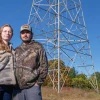
The proposed Maryland Piedmont Reliability Project, a 67-mile transmission line, has rocked the state’s farming communities. Many oppose new lines for energy-hungry data centers.
MT. AIRY, Md. — Standing in a 40-acre field of Christmas trees, Lisa Gaver traced the path of the high-voltage power line that could one day cut through the heart of her family’s farm.
The 500-kilovolt line would skim a parking lot, cross through the woods and over a metal deer fence, before running diagonally across a field of Douglas firs and blue spruces and continuing as far as the eye could see.
Gaver, a seventh-generation farmer, wants no part of what she and other landowners in rural Maryland call an “extension cord” for data centers in Northern Virginia 50 miles away. She figures that the tens of thousands of patrons who descend on the 150-acre farm annually to pick pumpkins, find their perfect Christmas tree and munch on apple cider doughnuts don’t either.
“It’s going to financially devastate us,” she said. “There’s $4 million worth of inventory in this field.”
For more than a year, tensions over a plan to construct a 67-mile transmission line across three Maryland counties — Baltimore, Frederick and Carroll — have rocked the state’s farming communities. Landowners have staked signs along the highway declaring, “No eminent domain for corporate gain.” A court battle has escalated into threatening social media posts and heated confrontations between farmers and land surveyors. Local officials from all three counties have opposed the project, and some have pleaded with state and federal officials to intervene.
Rating: 5