Tapanuli orangutans: Fears grow that world's rarest apes were swept away in Sumatran floods
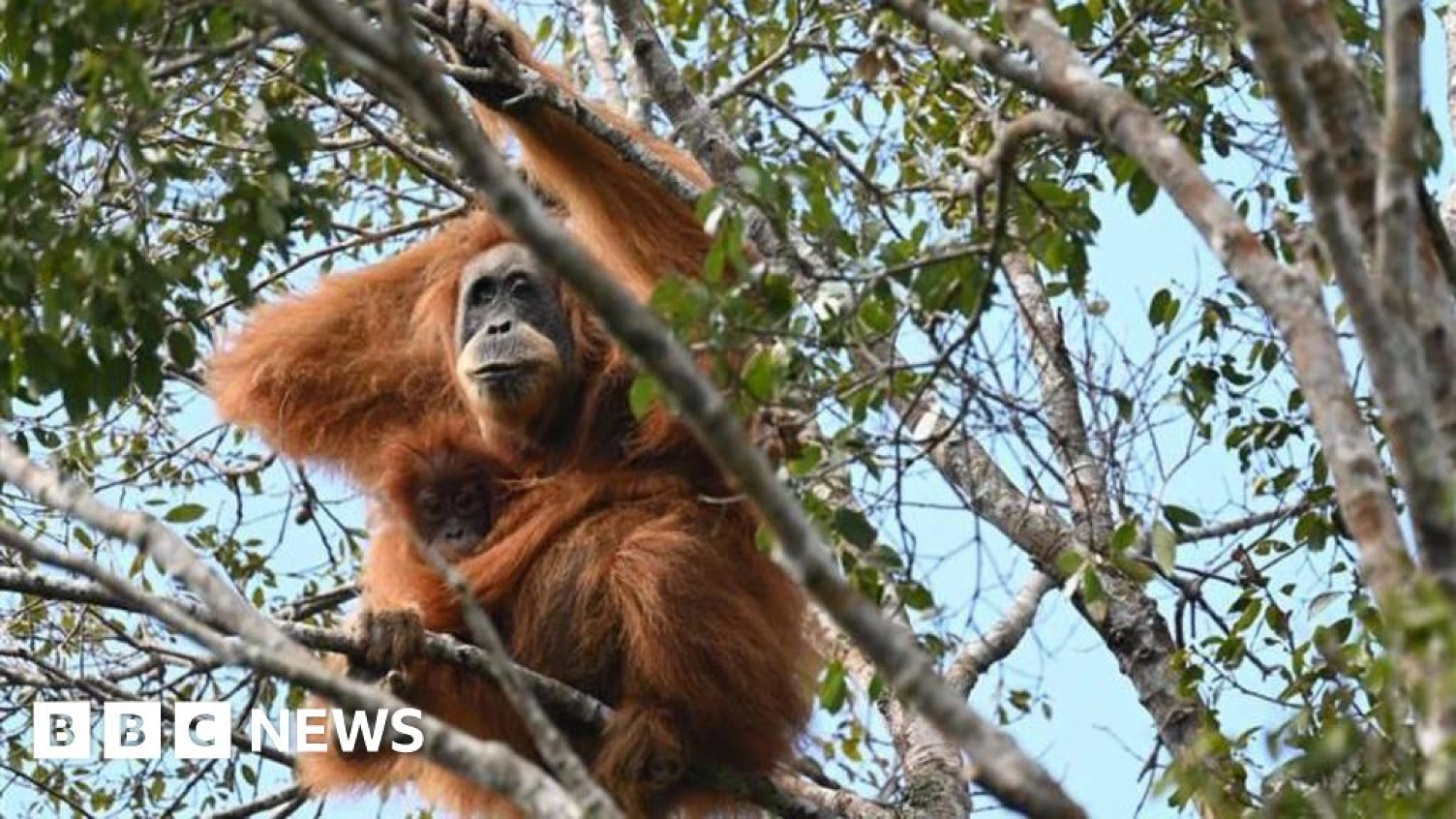
A carcass thought to belong to a Tapanuli orangutan, the world's rarest ape, has alarmed conservationists.
Watch LiveBritish Broadcasting CorporationHomeNewsSportBusinessInnovationCultureArtsTravelEarthAudioVideoLiveDocumentariesHomeNewsIsrael-Gaza WarWar in UkraineUS & CanadaUKUK PoliticsEnglandN. IrelandN. Ireland PoliticsScotlandScotland PoliticsWalesWales PoliticsAfricaAsiaChinaIndiaAustraliaEuropeLatin AmericaMiddle EastIn PicturesBBC InDepthBBC VerifySportBusinessExecutive LoungeTechnology of BusinessFuture of BusinessInnovationWatch DocumentariesTechnologyScience & HealthArtificial IntelligenceAI v the MindCultureWatch DocumentariesFilm & TVMusicArt & DesignStyleBooksEntertainment NewsArtsWatch DocumentariesArts in MotionTravelWatch DocumentariesDestinationsAfricaAntarcticaAsiaAustralia and PacificCaribbean & BermudaCentral AmericaEuropeMiddle EastNorth AmericaSouth AmericaWorld’s TableCulture & ExperiencesAdventuresThe SpeciaListEarthWatch DocumentariesNatural WondersWeather & ScienceClimate SolutionsSustainable BusinessGreen LivingAudioPodcast CategoriesRadioAudio FAQsVideoWatch DocumentariesBBC MaestroLiveLive NewsLive SportDocumentariesHomeNewsSportBusinessInnovationCultureArtsTravelEarthAudioVideoLiveDocumentariesWeatherNewslettersWatch LiveFears grow that world's rarest apes were swept away in Sumatran floods15 hours agoShareSaveNavin Singh KhadkaEnvironment correspondent, BBC World ServiceShareSaveOrangutan Information CentreThe Tapanuli orangutan was only discovered by scientists to be a separate species in 2017 – distinct from the Sumatran and Bornean apesAn unusual silence in the forests of north Sumatra in Indonesia is worrying wildlife experts and conservationists.
Here, in the mountainous forests of Batang Toru, is where they had always seen and heard the world's rarest ape, the Tapanuli orangutans.
But ever since Cyclone Senyar devastated Sumatra on 25 November, the critically endangered primates have not been seen in the area, conservation workers say.
Their absence has fuelled speculation as to whether the great apes were swept away by floods and landslides. And while some believe the animals may have travelled to a safer location, a carcass found in the area, said to be that of an orangutan, is fuelling conservationists' fears.
Fewer than 800 Tapanuli orangutans remain and any loss would have a serious impact on the species, conservationists say.
https://www.bbc.com/news/articles/cj4q1l0ly7wo?at_medium=RSS&at_campaign=rss
Rating: 5