Syria: Months after Assad's fall, families of missing still seeking justice
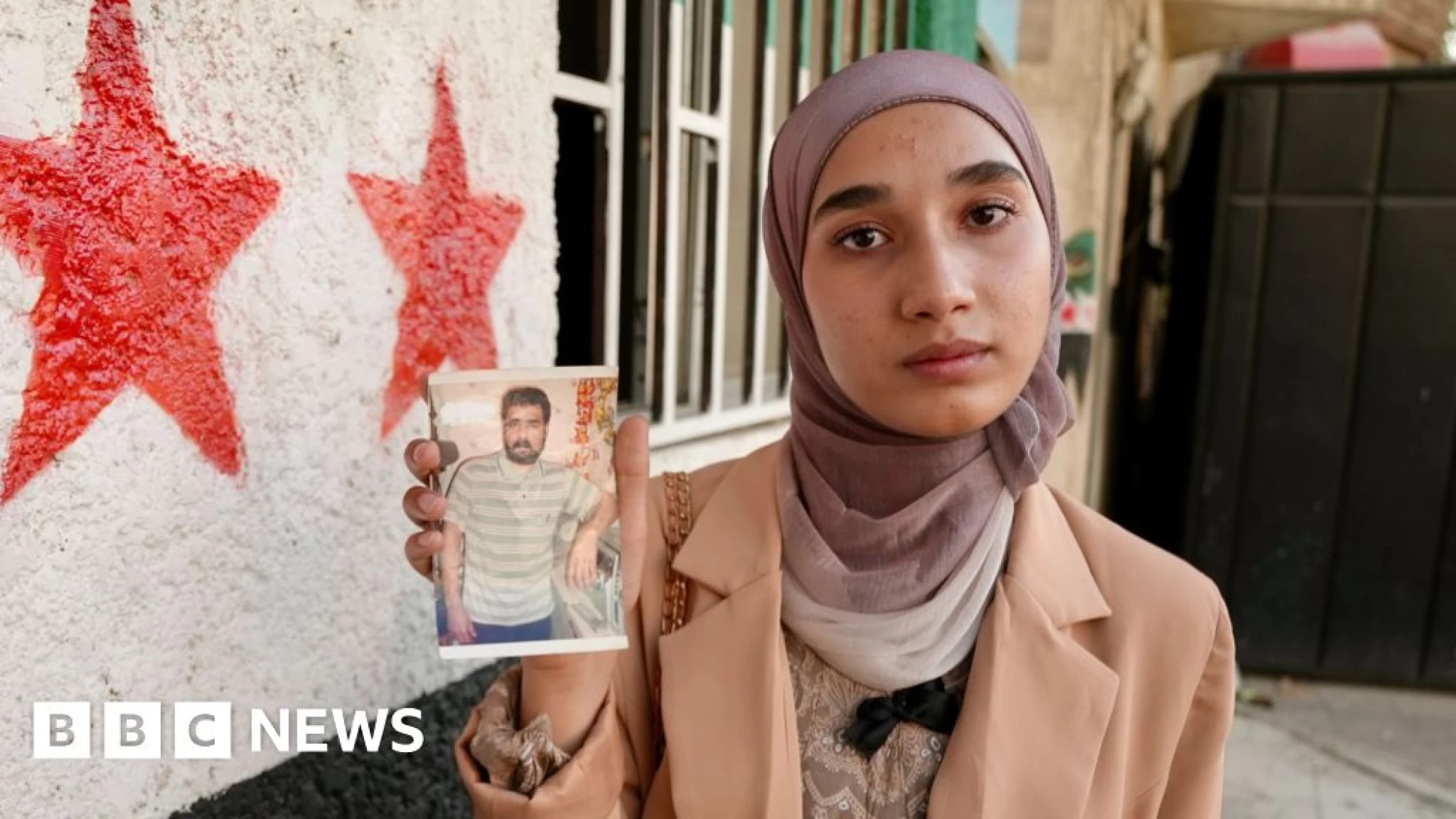
Some are only now coming forward with accounts of loved ones who disappeared during the civil war and are presumed dead.
Watch LiveBritish Broadcasting CorporationHomeNewsSportBusinessInnovationCultureArtsTravelEarthAudioVideoLiveDocumentariesHomeNewsIsrael-Gaza WarWar in UkraineUS & CanadaUKUK PoliticsEnglandN. IrelandN. Ireland PoliticsScotlandScotland PoliticsWalesWales PoliticsAfricaAsiaChinaIndiaAustraliaEuropeLatin AmericaMiddle EastIn PicturesBBC InDepthBBC VerifySportBusinessExecutive LoungeTechnology of BusinessFuture of BusinessInnovationTechnologyScience & HealthArtificial IntelligenceAI v the MindCultureFilm & TVMusicArt & DesignStyleBooksEntertainment NewsArtsArts in MotionTravelDestinationsAfricaAntarcticaAsiaAustralia and PacificCaribbean & BermudaCentral AmericaEuropeMiddle EastNorth AmericaSouth AmericaWorld’s TableCulture & ExperiencesAdventuresThe SpeciaListTo the Ends of The Earth EarthNatural WondersWeather & ScienceClimate SolutionsSustainable BusinessGreen LivingAudioPodcast CategoriesRadioAudio FAQsVideoBBC MaestroLiveLive NewsLive SportDocumentariesHomeNewsSportBusinessInnovationCultureArtsTravelEarthAudioVideoLiveDocumentariesWeatherNewslettersWatch LiveMonths after fall of Assad, families of Syria's missing still seeking justice2 days agoShareSaveOrla GuerinSenior International Correspondent, in SyriaShareSaveBBC/Goktay KoraltanHuman remains have been unearthed at this site in Eastern Ghouta, outside DamascusA burly bearded man in a blue tunic moved swiftly through grassy stubble on a windswept road in rural Damascus, collecting bones with his bare hands.
He added a jaw to the pile, before gently picking up a skull. Briefly, he kissed it - a moment of tenderness for one of the many victims of Bashar al-Assad. Ten months after Assad was ousted from power last December, in a lightning rebel advance, mass graves are still being uncovered.
The Syrian dictator's legacy is embedded in the soil here - skeletal remains where crops should be. There are now more than 60 grave sites and counting.
One of the latest came to light in al-Otaiba village, in the district of Eastern Ghouta, where a shepherd stumbled on clothing and human remains after straw was burnt off.
The authorities believe as many as 175 bodies were bulldozed into a mass grave in this former opposition stronghold.
https://www.bbc.com/news/articles/cj07p5zm229o?at_medium=RSS&at_campaign=rss
Rating: 5