India's blind women cricketers chase history at first T20 World Cup
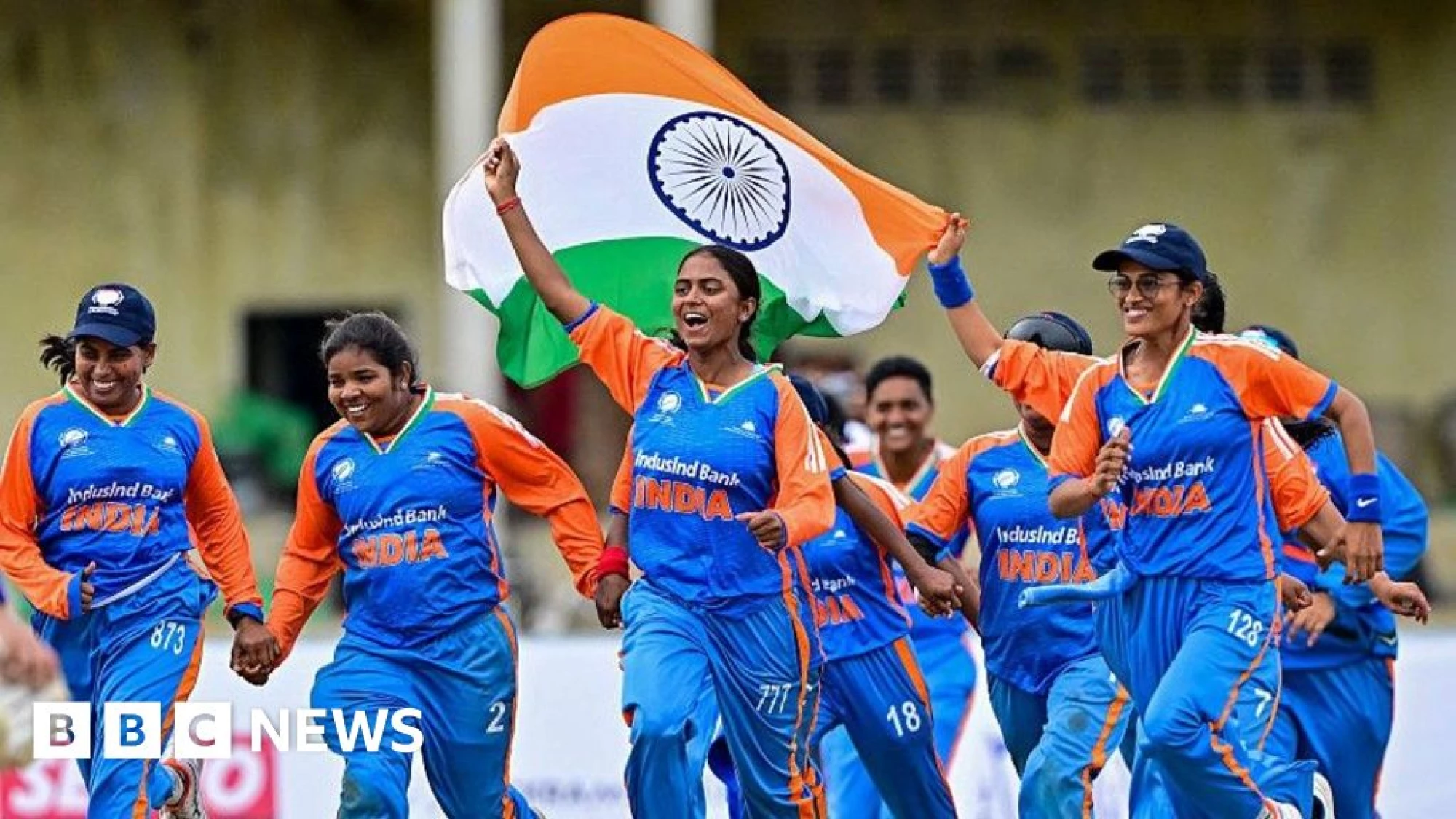
Most players come from underprivileged, rural backgrounds and learned the sport in the last few years.
Watch LiveBritish Broadcasting CorporationHomeNewsSportBusinessInnovationCultureArtsTravelEarthAudioVideoLiveDocumentariesHomeNewsIsrael-Gaza WarWar in UkraineUS & CanadaUKUK PoliticsEnglandN. IrelandN. Ireland PoliticsScotlandScotland PoliticsWalesWales PoliticsAfricaAsiaChinaIndiaAustraliaEuropeLatin AmericaMiddle EastIn PicturesBBC InDepthBBC VerifySportBusinessExecutive LoungeTechnology of BusinessFuture of BusinessInnovationWatch DocumentariesTechnologyScience & HealthArtificial IntelligenceAI v the MindCultureWatch DocumentariesFilm & TVMusicArt & DesignStyleBooksEntertainment NewsArtsWatch DocumentariesArts in MotionTravelWatch DocumentariesDestinationsAfricaAntarcticaAsiaAustralia and PacificCaribbean & BermudaCentral AmericaEuropeMiddle EastNorth AmericaSouth AmericaWorld’s TableCulture & ExperiencesAdventuresThe SpeciaListTo the Ends of The Earth EarthWatch DocumentariesNatural WondersWeather & ScienceClimate SolutionsSustainable BusinessGreen LivingAudioPodcast CategoriesRadioAudio FAQsVideoWatch DocumentariesBBC MaestroLiveLive NewsLive SportDocumentariesHomeNewsSportBusinessInnovationCultureArtsTravelEarthAudioVideoLiveDocumentariesWeatherNewslettersWatch LiveIndia's blind women cricketers chase history at first T20 World Cup13 hours agoShareSaveAnnesha GhoshSports writerShareSaveAFP via Getty ImagesIndia's players celebrate their win over Pakistan in the Women's Blind T20 World Cup on 16 November The ongoing inaugural Blind Women's T20 Cricket World Cup has put the spotlight on visually impaired Indian women who have overcome immense challenges to reach this stage.
They come from villages, farming families and small-town hostels, with many learning the sport only in the past few years.
The T20 tournament - a six-team event featuring India, Nepal, Pakistan, Sri Lanka, Australia and the USA - began on 11 November in Delhi. After a few matches in Bengaluru, the venue for the knockouts has now moved to Sri Lanka's capital Colombo.
The 16-member Indian squad represents nine states - Karnataka, Maharashtra, Rajasthan, Madhya Pradesh, Andhra Pradesh, Odisha, Delhi, Assam, and Bihar. Many players were introduced to the sport through schoolteachers, disability organisations, or community camps.
"Most of the players are from rural backgrounds," said team manager Shika Shetty. "Language and culture were barriers, families and teachers were often unwilling to let them pursue the sport, and even introducing the rules of blind cricket took time. But now they are all competing with pride."
https://www.bbc.com/news/articles/c78z8n3kvnro?at_medium=RSS&at_campaign=rss
Rating: 5